





February 2nd, 2010
by Dave Biering
Previous blog addressed importance of crystallinity control on PTFE as it relates to porosity, changes in physical strength and dielectric values. More Tri Star testing has shown better detail on the effects of processing and crystallinity. Specific gravity is the primary gage of crystalline or amorphous stages of polymers. In the case of PTFE the range is generally between 2.1 and 2.3 for unfilled resin. Testing showed that at 2.1 SpG the crystallinity of the molded product was approximately 38%. At 2.13 it was 47%, 2.15- 53%, 2.17 – 60%, 2.2 – 70%. Remember, the higher the crystallinity the lower the flex life, higher compressive stress, lower recovery, more permeability and lower wear life.
Another part of the equation has to do with microvoids as it relates to crystallinity. Microvoids are generally a result of poor attention to preforming conditions and to a lesser extent the sintering process. Microvoids, or porosity, have a direct bearing on crystallinity. As an example, a low microvoid material at 2.13 SpG would be 47% crystalline. However, if processing problems occur and void content grows you could see a substantial increase in crystallinity. At a 1% microvoid level the 2.13 sample at 47% crystallinity would increase to 53%. Doesn’t sound like much but could have a great influence on the properties and wear of the material. Additionally, at 1% void content the dielectric strength of the PTFE would drop from it’s normal 500 v/mil to 320 v/mil. This is significant when considering PTFE as a dielectric insulator. For more information on the importance of quality in PTFE, contact Tri Star via this blog site or our website @www.tstar.com.
Tags: Dielectric values of PTFE, Finding quality PTFE, PTFE crystallinity, Teflon and Crystallinity
Posted in High Performance Plastic Materials | No Comments »
February 1st, 2010
by Dave Biering
There is a lot of talk these days about biodegradable plastics, renewable resources, carbon footprints and the like. It’s interesting that as companies look at the feasibility of biodegradable plastics they also look at how it affects the other aspects of the ecology. If it takes more energy and produces more negative effects on nature we have to be able to justify the efforts. Today’s bioplastics technology is catagorized several ways. There are pure bio polymers that are based on polylactides (fermented bacteria), cellulose ( naturally occuring wood product), lignin (a macromolecular by-product of paper), biopolymer blends (combination of bio sources) and finally polymer blends which utilize biomaterials and petroleum products.
Bioplastic products are further classified by either compostable or true biodegradable. Compostable bioplastics degrade by at least 90% within 6 months by natural environmental conditions; i.e. temperature, humidity and pH. This degradation occurs through typical composting breakdowns and the result is by-products such as water, carbon dioxide, methane and humus. Some biodegradable polymers will break down through naturally occuring micro-organisms such as bacteria or fungi. Today, most of the bioplastics that fall into this category are packaging films and consumables but that is changing. More and more bioplastics are being developed with higher engineering potential. Materials that can withstand loads, can be extruded into shapes and molded or machined into finished parts for things as diverse as musical instruments to display panels in store fronts. It is also available in stock shapes such as rod, sheet, tube and custom profiles. Tri Star Plastics is working closely with bio-partners to develop more and more options in this interesting new world of bio-plastics. For more information on this technology, contact our Technical Department at www.tstar.com or send us a return blog! More interesting things on the way!
Tags: bio-plastics, biodegradable plastics, compostable plastics, eco-plastics
Posted in High Performance Plastic Materials | No Comments »
February 1st, 2010
by Dave Biering
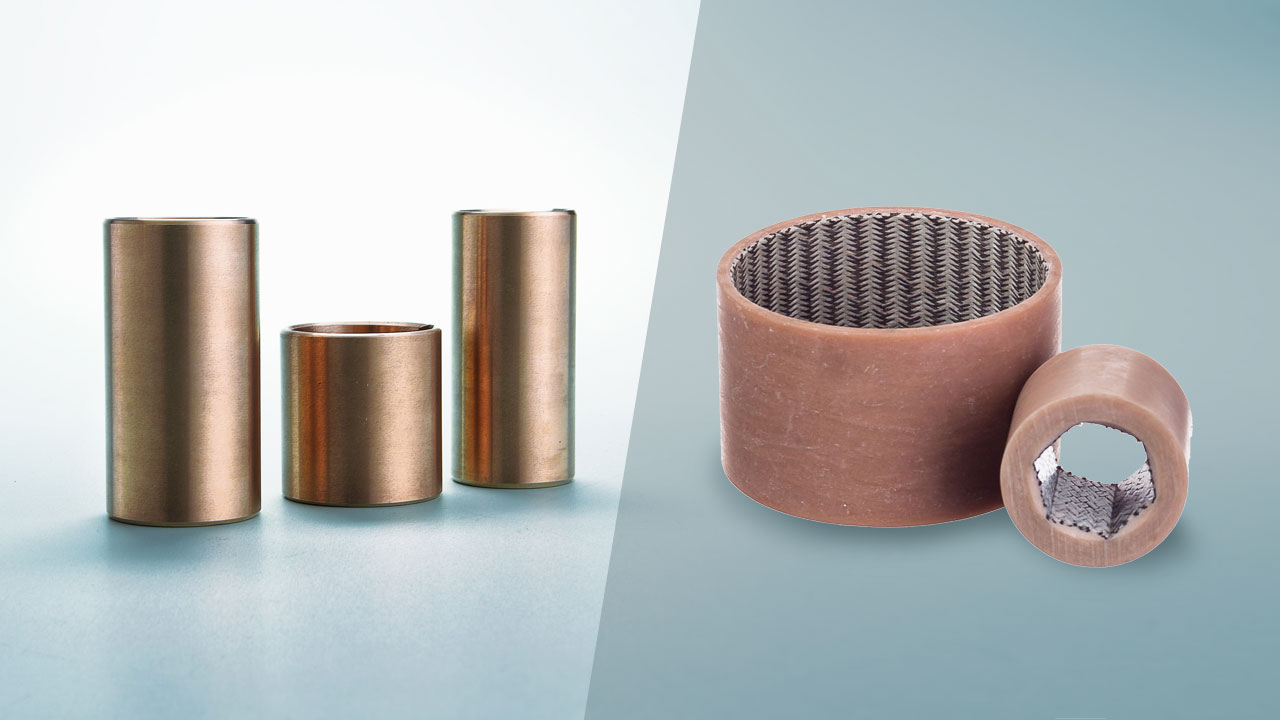
The Dixon M-Liners from Saint Gobain have become very difficult to obtain since they come from overseas. Tri Star is now offering a size for size equivalent product in it’s Tri Steel product line called Tri Steel PE. This product is a rolled steel backed polymer lined bearing. The polymer liner is a special PEEK/PTFE combination that has a thicker dimension than normal steel backed bearings. This allows for post machining of the ID to tighter tolerances without removing the primary bearing source. Learn more from Tri Star’s website www.tstar.com and review the information on Tri Steel Bearings or watch our Tri Steel video on the Video Learning Center.
Tags: Dixon M-Liner, DU Style Bearings, M-Liner, Saint Gobain M-Liner, Tri Steel PE
Posted in Composite Bearings, Video Learning Center | No Comments »
February 1st, 2010
by Frank Hild
With the recent spike in air travel over the holidays, I was reminded of some of the aerospace materials that our team often treats, particularly foam. Foam is a common insulation material aboard aircraft, used to fill open crevices between the passenger compartment and the outer shell. It serves a number of functions such as regulating temperature, reducing engine noise, and protecting the mechanical systems from moisture and temperature variations that may lead to corrosion.
Currently, micro-light fiberglass is used for aircraft insulation, but it has the tendency to absorb moisture, which can add substantial — and unwanted — weight to the craft. A typical flight may consist of up to 1,500 lbs of water weight.
Our team is working on an alternative to fiberglass insulation . The following materials are foam products that offer good acoustic, insulative, and weight properties, but have a tendency to absorb moisture like the fiberglass. We treat these foam products to inhibit these properties:
1) AC 530 — a polyimide material, is lightweight, fire resistant and offers thermal and noise insulation. It is a flexible material, but holds its shape and conforms to structural inlay. But, this foam is prone to moisture absorption.
2) Melamine foam — is also lightweight, fire resistant, and offers thermal and noise insulation. This foam is flexible and holds its shape and conforms to structural inlay. But, this foam will naturally absorb moisture particularly well.
Our hydrophobic process offers the distinct advantage of penetrating the entire surface of the material, unlike some processes that may sit only on the surface. Our process enhances the properties to form a better water-resistant property that inhibits the absorption of moisture maintaining the dry weight of the aircraft.
As always – if you are still burning with questions, Ask The Experts!
Tags: AC 530, aerospace materials, aircraft insulation, foam insulation, hydrophobic foam, melamine foam, PEEK foam, rigid insulation
Posted in Uncategorized | No Comments »
January 28th, 2010
by Frank Hild
A recent development at TriStar – Surface Modification Division is a liquid surface treatment to induce a hydrophobic property. Most foam materials are very hydroscopic and absorbent. When our hydrophobic liquid surface treatment is applied to most foam materials, the foam becomes extremely hydrophobic. Below is an image of our treatment on medical grade polyurethane foam.

Though our tests indicate this treatment does not work well on natural materials like wood and cotton, but this treatment performs great on synthetic fibers and fabrics.
If you would like more information on this product, please continue to our website at www.tstar.com.
Tags: fabric, foam, hydrophobic, hydrophobic treatment, threads
Posted in Surface Modification | No Comments »
January 8th, 2010
by Dave Biering
Recent headlines tell us that everything from our kitchen cutting boards, Tupperware and soda fountain delivery tubing are infected with everything from fecal matter to salmonella. There are solutions available thanks to new polymer technology using antimicrobial additives and surface treatments. Many polymers are now available with silver ions which help to effectively inhibit the potential growth of bacteria, yeast and fungi on the polymer surface. By using unique zeolite carriers with silver ions, a counter force to the sodium ions present in moisture interrupt respiration, reproduction and metabolism of destructive microbes. TriStar offers several polymer solutions now in molding and extrusion resins to dramatically reduce the potential of microbial growth in your products. Browse through our Video Learning Center for even more information.
Tags: antimicrobial polymers, plastics, plastics that kill bacteria, silver ion plastics
Posted in High Performance Plastic Materials, Surface Modification | No Comments »
January 6th, 2010
by Dave Biering
If you have been machining metal for a while the change to plastics can be a little daunting. There are some tricks to the trade and some basic things you need to know about thermal expansion, speeds and feeds and the use of coolant. The biggest thing to remember is that most plastics, especially those that are thermoplastic, will melt when they get hot enough. Thermosets won’t melt but can be brittle to machine so they are a totally different problem. Since heat is the culprit you must machine each plastic with the knowledge that it will grow, sometimes very rapidly, and then shrink again after machining. Some materials have to be machined once, normalize at room temperature, and then go back for final cuts. Sharp tooling, properly designed tools, speeds and feeds are all critical so there will be a learning curve. TriStar offers a “Machining Plastics” seminar and design manual through their website. For even more tips, Ask The Experts – that’s what they are there for! It’s not rocket science but there are tricks to the trade!
Tags: how to machine plastics, machined plastic parts, Machining plastics, Video Learning Center
Posted in Uncategorized | No Comments »
December 21st, 2009
by Dave Biering
The growth of plastics in medical devices is growing exponentially around the world. Plastics are regulated like any other materials that may come in contact with human tissue or fluids and that usually falls under testing procedures issued under USP or ISO10993. There are three time scales for biocompatible devices. “Limited” would be less than 24 hour exposure, “Prolonged” is 24 hours to 30 days and “Permanent” is 30 days and longer. Device’s are categorized as Surface Devices which would be items such as electrodes for monitoring, contact lenses, catheters, endotracheal tubes, sigmoidoscopes and similar devices. Second would be Externally Communicating Devices such as laprascopes, blood administration devices, pacemakers, oxygenators and the like. Finally are Implant Devices such as orthopedic pins or plates, heart valves, grafts, stents and similar devices.
Testing of these devices includes mechanical, thermal, chemical tests as well as systemic injection, intracutaneous and implantation. All of these must be done before a plastic component can be approved. Typical materials for biocompatible applications include medical grades of PVC and Polyethylene, PEEK, Polycarbonate, Ultem PEI, Polysulfone, Polypropylene and Polyurethane. For more specific information on Biocompatible materials as well as special plasma preparation treatments of all of these materials, contact TriStar Plastics at www.tstar.com and visit our Video Learning Center and our Materials Database.
Tags: Biocompatible plastics, Biomedical testing of plastics, medical grade plastics, plasma treatement of medical plastics
Posted in High Performance Plastic Materials, Surface Modification, Video Learning Center | No Comments »
December 21st, 2009
by Dave Biering
Ultracomp Composite Bearings are designed for extreme loads where impact and vibration may occur. Because of it’s very high impact strength it can take extreme loads as well as shock loads. Ultracomp requires no lubrication which eliminates maintenance, is much kinder to the environment and reduces overall costs of ownership. Ultracomp absorbs virtually no moisture, takes static loads up to 55,000 psi and handles dirty, gritty environments. Ultracomp is also an excellent underwater bearing for applications as diverse as bowthrusters, rudder bearings, roller bearings, dockside equipment exposed to salt air and water. Also an excellent bearing material for construction, material handling and ag equipment.
Visit our Video Learning Center to learn more about all we have to offer.

Tags: High impact bearings, maintenance free bearings, roller bearings, self lubricating bearings, underwater bearings
Posted in Composite Bearings, Video Learning Center | No Comments »
December 16th, 2009
by Frank Hild
The dynamics of wetting are described below:
Spreading = A – ( B+ C )
Where:
- A = surface energy of solid (given below)
- B = surface tension of liquid
- C = surface energy of solid-liquid interface
If Spreading is:
- Negative. Then, liquid will bead up.
- Zero. Then, liquid will spread.
- Positive. Then, liquid will spread.

If the material surface energy is relatively low, then the coating will not flow well and fisheyes, pinholes, gaps, or air bubbles will form. If the material surface energy is too high, then the paint, ink, or coating may bleed or be difficult to control. Therefore, the surface tension of the liquid and the surface energy of the material must be matched for the application.
Don’t just listen though – take a look! Visit our Video Learning Center for an in-depth look.
Tags: contact angle, dynes, plastic, plastics, surface coating, surface energy
Posted in Surface Modification | No Comments »