


 Adrian Carrera
Which liner material is best for my application? This is a question that we often hear from our manufacturing partners. To determine the most suitable option, it is essential to consider factors such as operating conditions, indoor/outdoor environments, extreme temperatures, speed, load, chemical exposures and friction requirements, and mating hardware.
Getting the selection right starts with understanding your application's demands before evaluating liner options. The right combination of base polymers, fillers, and backing materials can significantly extend service life and provide critical protection in the event of wear-through or bearing failure.
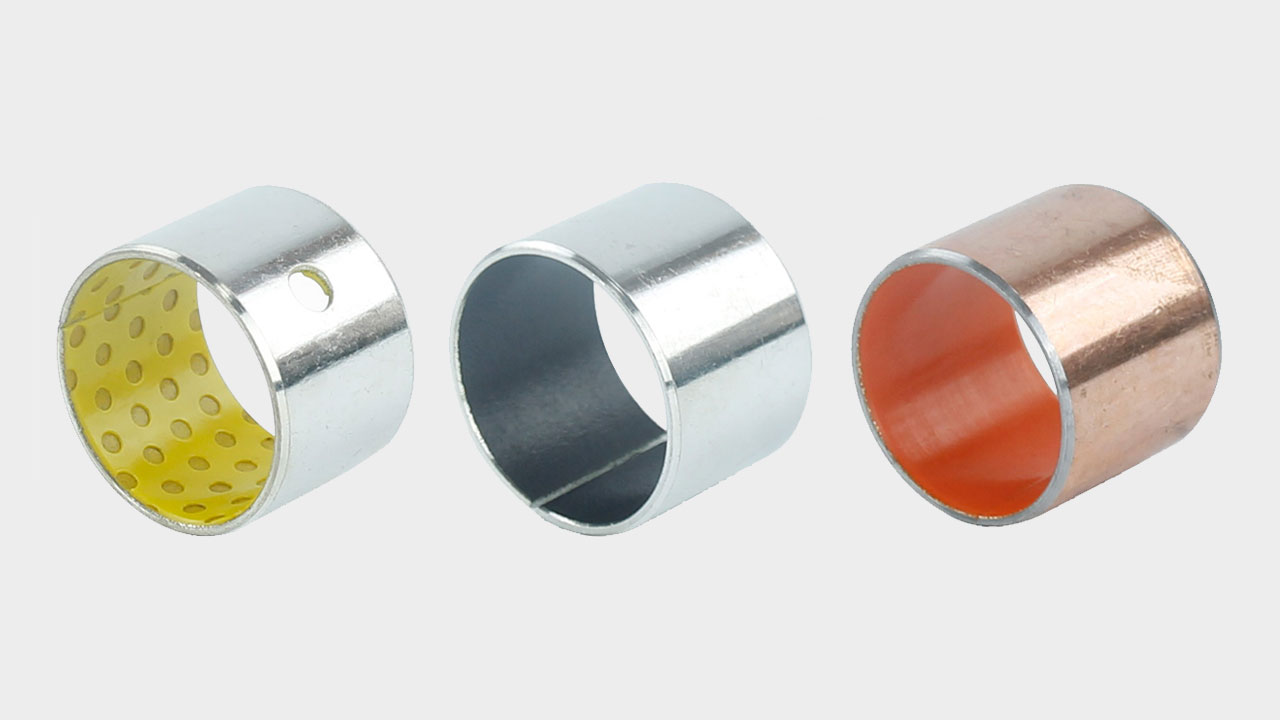
Each liner material has a specific wear rate, and choosing the right combination of base polymers, fillers and backing materials can enhance protection in case of wear-through or bearing failure. One versatile option to consider is our TriSteel reinforced system. A suitable replacement for bimetal and bronze bearings, TriSteel bearings have metal-backed shells combined with special polymer liners for self-lubrication and improved wear properties.
Standard shells include tin-plated steel (Z), stainless (S), copper-plated steel (P), and bronze (B), while standard liners feature options such as PTFE (PT), POM (AC), PEEK (PE), lead-free food grade PTFE (PTS), POM/PTFE (AT), modified PEEK (PE), modified PTFE (PR), and modified PTFE for higher speeds and high side load conditions (P4).
Start With These Selection Criteria
Before selecting a liner material, evaluate each of the following factors systematically:
-
Load: Higher loads require liners with elevated PV capacity and robust backing materials
-
Speed: Reciprocating, oscillating, and rotary motion each place different demands on liner performance
-
Temperature: Operating range determines whether standard or high-temperature liners are appropriate
-
Environment: Wet, dry, chemical exposure, or food-grade requirements will narrow your options significantly
-
Size and shape: Affects machinability and whether secondary operations will be required
-
Cost: Balance material performance against budget and production volume
Once you've worked through these criteria, use the liner summaries below to identify your best candidates. For a detailed performance comparison of each liner, including PV ratings and dry vs. lubricated behavior, see our companion guide: Reinforced Plane Bearings: The Pros and Cons of Different Liners.
Liner Options and Recommended Applications
Some common liner options and their uses are:
-
PT: Low friction, high PV, high speed, no lubrication required, high-operating temperature. Often used in material handling, agriculture, hydraulics, and food-grade applications (PTS version).
-
AC: Ideal for boundary-lubricated environments with high PV. Commonly found in mining equipment and chassis components.
-
PE: Works with or without lubrication, high PV, high temperature. Often used in chemical pumps and valve bushings utilizing the stainless-steel backing material.
-
PR and P4: Suitable for high-speed reciprocating, self-lubricating, high-temperature, and high-load applications. Commonly used in valves, shock absorbers, and hydraulic controls.
-
AT: Designed for high-PV and high-speed applications without lubrication. Typically used in ski lift chair clip bearings and lift-and-tilt systems.
Not sure which liner fits your operating conditions? Our engineers can review your design specifications and recommend the right TriSteel configuration for your application.
For more information about reinforced bearings or to have us make a recommendation based on your unique design specifications, reach out to our bearing experts.
Note: All TriSteel bearings are available without lead.