



 Adrian Carrera
In our selection guide, we reviewed the key criteria to evaluate when choosing a liner material for reinforced plane bearings: load, speed, temperature, environment, size, and cost. Once you've worked through those factors, this page serves as your technical reference for comparing liner performance side by side.
The final liner selection will depend on the exact parameters of your application, and the differences between options matter more than they may initially appear. PV capacity, lubrication behavior, and temperature limits vary significantly across liner types, and specifying the wrong liner can result in premature wear, increased friction, or unexpected failure.
Liner Performance Comparison
Use the table below as a quick reference before reviewing the full breakdown of each liner.
| Liner | Lubrication | Max PV (Dry) | High Temp | Primary Use Cases |
|---|---|---|---|---|
| PT | Dry or Lubricated | High | Yes | Material handling, agriculture, hydraulics, food grade (PTS) |
| AC | Dry or Lubricated | High | No | Mining equipment, chassis components |
| PE | Dry or Lubricated | High | Yes | Chemical pumps, valve bushings |
| PR / P4 | Dry or Lubricated | High | Yes | Valves, shock absorbers, hydraulic controls |
| AT | Dry Only | High | No | Ski lift clips, lift-and-tilt systems |
PT
Low friction, high PV, high speed, no lubrication required, high-operating temperature. An enhanced-wear PTFE liner for use in lubricated and dry environments. With lubrication, PV ratings can exceed 1,000,000.
Best for: Material handling, agriculture, and hydraulics. The PTS version is lead-free for use in food-grade applications.
AC
Good for use in lubricated or dry environments, and offers high PV. With lubrication, PV ratings can be met without limitations. Lubrication reservoirs are available on the liner to produce a constant storage and pumping action for better hydrodynamic film generation.
Best for: mining equipment, chassis components
Note: AC is particularly well-suited for boundary-lubricated environments where intermittent lubrication is available. The reservoir design makes it a strong candidate for applications where consistent grease replenishment is difficult.
PE
Operates with or without lubrication, high PV, and high temperature. With lubrication, PV ratings can exceed 1,000,000. Lubrication reservoirs are available to produce a constant storage and pumping action for better hydrodynamic film generation; reservoirs unnecessary in dry applications.
Best for: chemical pumps and valve bushings. Frequently specified with stainless steel backing for corrosive or chemical exposure environments.
PR and P4
Good for high-speed reciprocating, self-lubricating, high-temperature and high-load applications. Liner is designed specifically for high-frequency dither applications.
Best for: valves, shock absorbers, hydraulic controls – both lubricated and dry.
Note: P4 is the preferred choice when side load conditions are elevated or when operating speeds push the limits of standard modified PTFE liners. If your application involves high-frequency motion combined with high loads, P4 should be your first consideration.
AT
High-PV and high-speed applications, and this liner will run with zero lubrication. Liner thickness allows for secondary machining to accommodate misalignment.
Best for: ski lift chair clip bearings, lift and tilt on medium-speed and mid-load applications.
Note: AT's machinability advantage makes it a practical choice when bore geometry or alignment corrections are needed after installation.
Conclusion
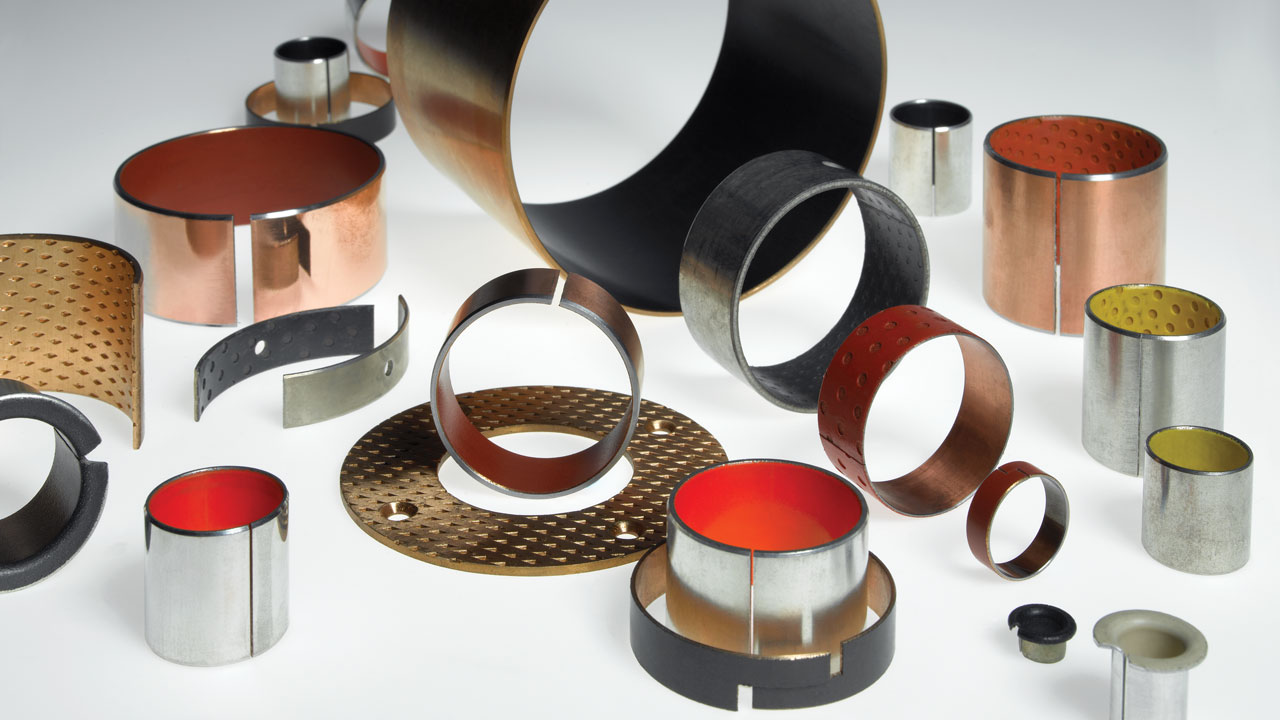
TriSteel reinforced bearings are metal-backed and contain various self-lubricating liner materials that are sintered to the substrate for longer wear. Read about our newest variation, TriSteel P4.
If you've identified your liner but need help confirming the right shell material or configuration, start with our reinforced plane bearing selection guide or submit your design specs directly to our engineering team.
Interested in learning more about reinforced bearings? Submit your design specs or request a quote!
