








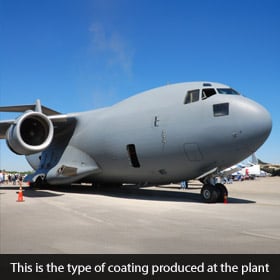
A major paint manufacturer reached out to us after a fatal flashover at a facility that produces paints and coatings for military applications. An additive had turned mixing into a high-risk step, and copper tools were no longer fail-safe. They needed rigid, corrosion-resistant, non-metallic paddles and ladles that could be safely grounded.
A Sensitive Process with Unforgiving Edges
The plant’s specialty batches include an additive that can tip into explosive flashover under adverse electrostatic conditions. Standard metal mixing blades were out. For years they’d relied on copper ladles and paddles for corrosion resistance and static bleed-off, until one mistake proved the approach wasn’t fail-safe. We were invited into the secure facility to map risk and rethink the tooling.
Requirements That Don’t Usually Coexist
The safety and engineering teams asked for a non-metallic system that could be molded or machined, a 6-foot handle with minimal flex, resistance to aggressive additives, and—critically—controlled electrical behavior: insulating during use, yet able to dissipate charge when tied to a grounding station.
From Problem Statement to Production Tooling
We sent two engineers onsite to observe the workflow, measure paths to ground, and audit failure modes. Back at the lab, we evaluated compounds for stiffness, thermal and chemical resistance, and surface/volume resistivity. The solution was a hybrid carbon-filled resin system: non-metallic and stiff, with engineered dissipation to carry charge safely to ground without creating sharp conductive edges that can invite flashover.
With an operating capability above 400°F and excellent chemical resistance, the resin also withstood frequent cleaning cycles.
Why This Material Works Here
The carbon resin system delivered two wins: structural rigidity for long-reach handles and tuned, predictable conductivity for electrostatic discharge control. The base resin’s corrosion resistance kept wetted surfaces stable, preserving resistivity over time. Machinable and moldable, it let us build a full kit—ladles, paddles, and interchangeable heads—to print, then refine geometries to remove sharp transitions and stress risers.
Deployed: Rigid, Groundable, Problem-Free
TriStar produced the complete attachment set by molding and precision machining. Since the changeover, the plant has reported clean audits and no incidents. Operators get rigid, lightweight tools that tie into the grounding station as designed; safety gets a controlled-dissipative, non-metallic system; production gets repeatable parts and a simple maintenance plan.
Creative Material Solutions for Safety-Critical Systems—Think TriStar
High-stakes processes demand materials that solve for mechanics, chemistry, and electricity at once. If your mixing, compounding, or transfer operation has similar constraints, our team can help you engineer a safer, more reliable path forward. Contact our experts to start the conversation.
Consultative Engineering for Optimal Material Selection
