| Home > Products > Surface Modification > Types of Techniques > Corona |
Corona Discharge
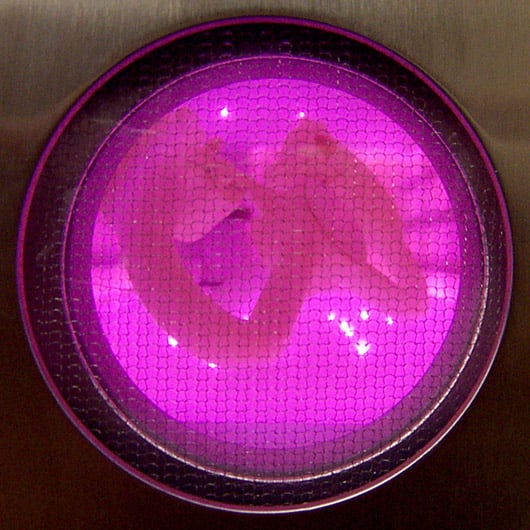
A corona discharge is plasma at standard atmospheric pressure. This plasma is produced by high voltage and the close proximity of two metal plates (electrodes) in atmosphere. When an electrical discharge occurs, ions and ozone are nearly always generated. This ozone compound is relatively short-lived and may dissociate to molecular oxygen (O2) and oxygen radical (O`). The oxygen radical is then free to work on the polymer or other molecules in the air.
Advantages
- Price of purchasing a system for in-house treatment
- Systems are robust and easy to maintain
- Ease of use
Considerations
- Lack of surface chemistry selectivity
- Most corona systems are designed to operate in open-air conditions since the treatment is as consistent as the air around the system. Treatment is also limited to air chemistry (78% nitrogen, 20% oxygen, 2% other). This design limits the polymers that can be treated; more stable polymers usually cannot be treated by this method.
- Limited polymer choice
- Treatment is two-dimensional
Example
A Corona system is commonly used for reel-to-reel thin film, webs, tape, or fiber applications.
Learn more about additional Surface Modification techniques:
Benefits of Surface Modification:
- Uniform 3-D treatment
- Chemistry control
- Longer lifespan
- Roll-to-roll capability
- Corrosion-resistance
- Bondable
- Inert surface
Common Industry Applications
Medical
- Plasma-cleaning
- Devices including catheters, endoscopes, stents, intra-ocular lenses, etc. prior to the application of a specialty and/or lubricious coating, adhesive, or marking.
Optical
- Plasma-cleaning and/or photolysis treatments
- Materials including polycarbonate, glass, CR39, TrivexTM, PMMA, and urethane, for lenses, films, depositions, MOEMs.
Pharmaceutical
- Devices for drug delivery and storage
Biotechnology
- Plasma-cleaning, functionalization and silane deposition treatments
- Micro-arrays, micro-fluidics, MEMs, etc.
Aerospace, Automotive and Commercial Products
- Improve the adhesion of gaskets and other dissimilar materials, remove "tack" from silicon devices, and increase adhesion of elastomer material to metal, polymers and other elastomers
Complete our Sample Processing Form
Review our brochures for more information:
- An Introduction to Surface Modification
From cell culture trays to bonding disimilar materials, learn more about modification options. - Surface Modification Techniques
Including plasma, corona, photolysis, and parylene - Types of Failure
Adhesive, cohesive and substrate failure