Plasma treatment is a surface modification technique that readily primes any surface for better acceptance of secondary manufacturing applications.
Plasma is a reactive treatment process where positive and negative ions, electrons, and radicals react and collide as long as an electric potential difference exists. TriStar uses low pressure, or vacuum plasma, for more consistent and longer-lasting surface treatments. With plasma treatment, you can:
- Microscopically change surfaces for improved bonding
- Micro-clean to enhance the surface wetting of adhesives or over-molded elastomers
- Functionalize groups (carbonyl, hydroxyl and others) to improve surface energy
- Establish hydrophobic and hydrophilic properties
Materials ranging from ceramics, polymers, elastomers and metal assemblies are all good candidates for plasma treatment. In fact, plasma treatment actually boosts production yields by reducing defects caused by insufficient bonding of paints, inks, moldings and other coatings. Building plasma treatment into your manufacturing process upstream can eliminate defective application performance downstream.
Plasma in Practice
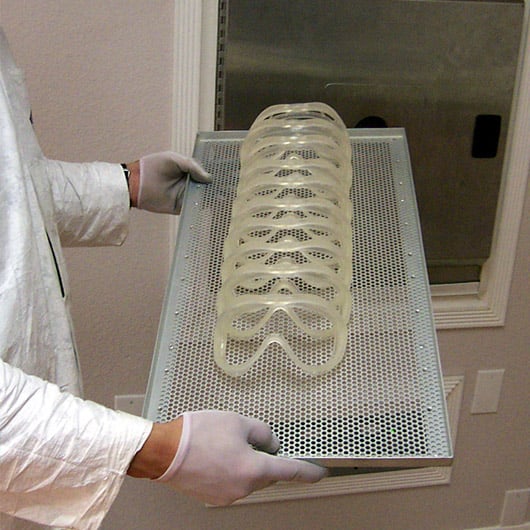
Plasma surface treatment is extremely versatile and used in a range of industries. It can enhance biocompatibility, prevent moisture absorption thru hydrophobic treatments, and it improves functionalization and adhesion ― all from a value-driven, green alternative to harsh chemical techniques. It even extends treatment lifetime from days to years.